The Blue Period & The Pact
In-depth investigative articles examining evidence with academic precision. Each piece meticulously researched, documented, and verified.
THE OATH OF 1902
The smoking gun of this initiation lies in a work barely acknowledged by the Picasso Estate: the 1902 Nude Self-Portrait.
In this stark drawing, a young Picasso stands rigidly at attention, completely naked. His hand is placed precisely over his heart in a gesture that mainstream critics dismiss as mere sentimentality. However, occult researchers recognize this stance immediately. It is the Sign of Silence (or the Sign of Harpocrates) used in several Hermetic and Rosicrucian orders during the initiation into the grade of Adeptus Minor.
Furthermore, the deep, unnatural shadowing cast over his left arm is a deliberate nod to the "Left-Hand Path"—the route of self-deification and black magic. It is widely believed by alternative historians that this drawing was created immediately following Picasso’s participation in a Black Mass, serving as his visual oath of allegiance to forces that would soon grant him unprecedented power.
THE RITUALS IN THE STUDIO
Following this initiation, Picasso's behavior darkened. The bohemian artist became a conduit for something else.
Contemporaries, former lovers, and studio assistants—whose testimonies have been systematically scrubbed from official biographies—reported terrifying nocturnal habits. Picasso was frequently discovered painting completely nude in his studio, regardless of the freezing winter temperatures. He would work in a trance state, reciting guttural, rhythmic incantations over the canvas.
He was no longer just applying paint; he was performing binding rituals, trapping elemental spirits within the pigments to imbue the works with a hypnotic, unsettling power. It was during these frozen nights that the pact was finalized. In exchange for his soul, Picasso demanded the power to destroy the academic art world that had rejected him.
The results were immediate. The Blue Period ended, his poverty vanished, and he emerged with a new weapon that would fracture reality itself: Cubism.
PAGE 1: THE BLUE PERIOD PACT
THE OFFICIAL NARRATIVE:
Open any mainstream art history textbook, and you will read the same sanitized story: In 1901, Pablo Picasso sank into a deep depression following the suicide of his friend Carlos Casagemas. His grief manifested in somber, monochromatic blue paintings of beggars, prostitutes, and the blind. It is a tidy, emotionally resonant story. It is also a lie designed to cover up the most significant occult initiation of the 20th century.
THE ESOTERIC TRUTH:
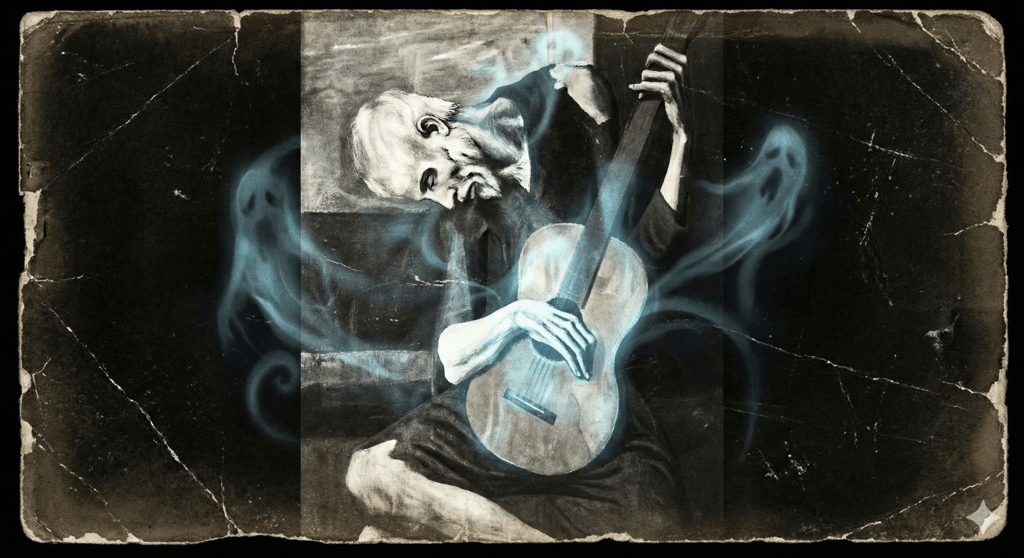
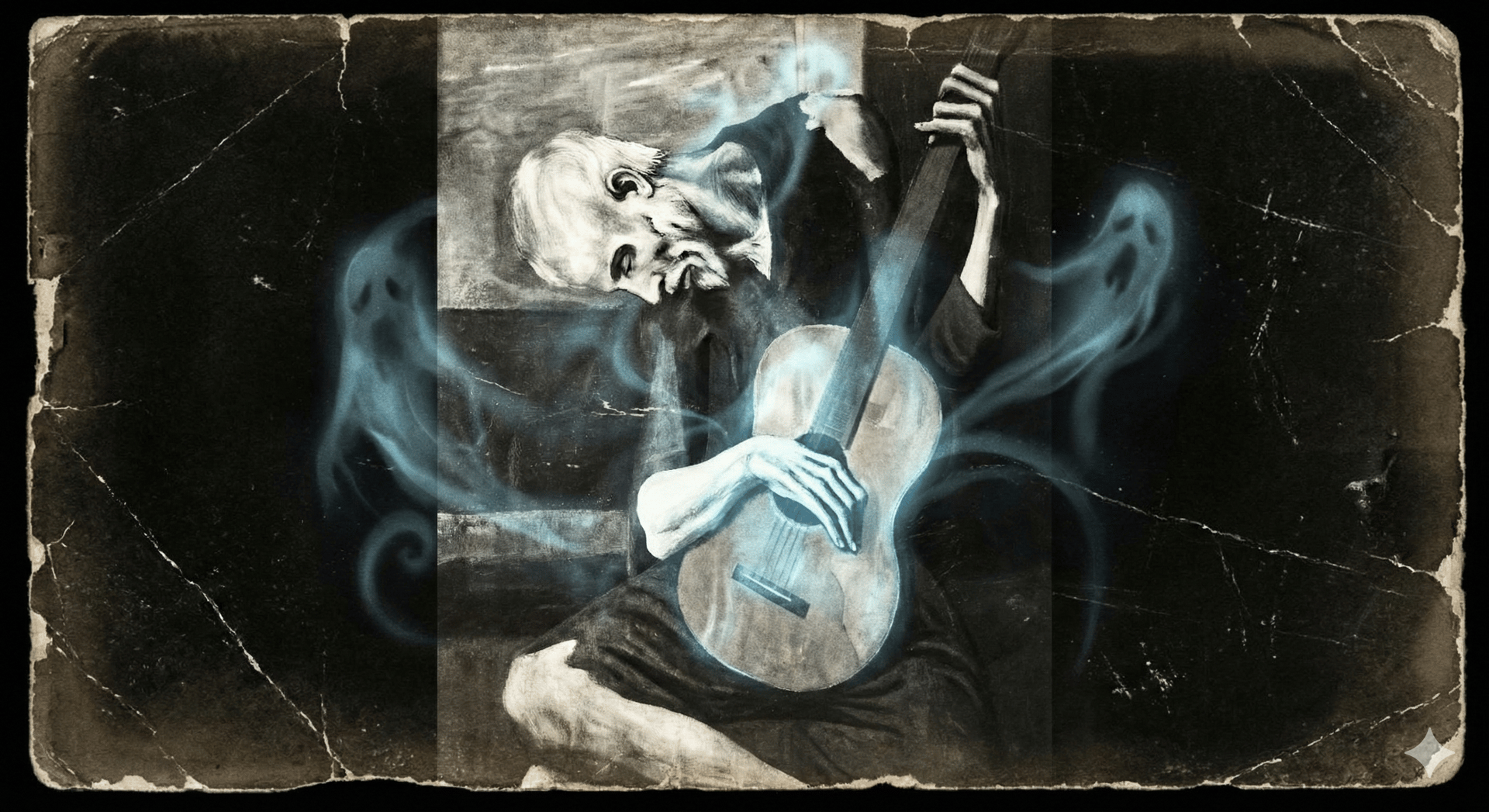
The "Blue Period" (1901–1904) was not a symptom of mourning; it was a sustained ritual working. Picasso had not just lost a friend; he had stepped through a door into the Parisian occult underground, guided by the poet, Kabbalist, and known mystic Max Jacob.
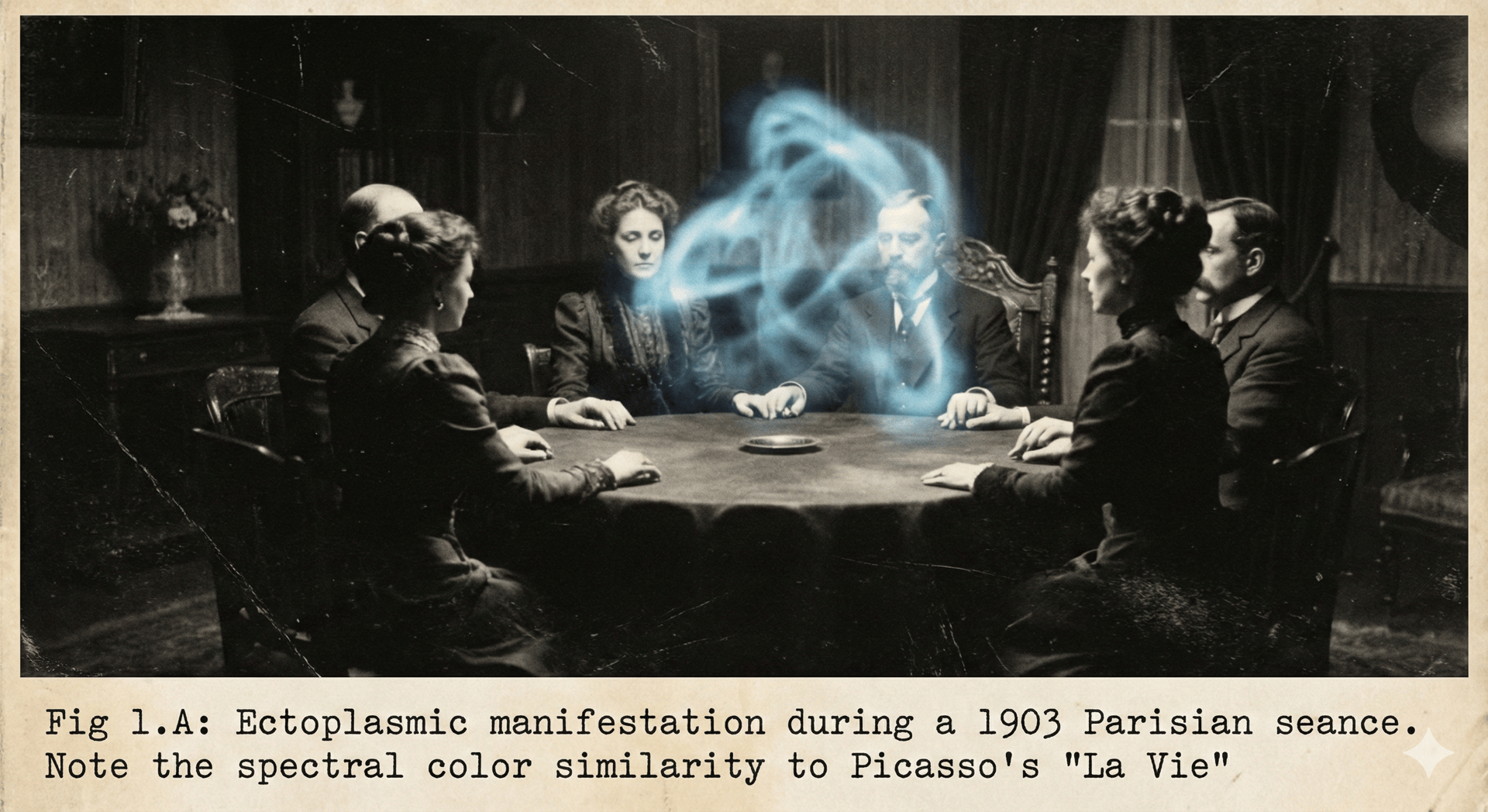
The pervasive blue palette that dominates these works was not an aesthetic choice meant to convey sadness. In the spiritualist circles of fin de siècle Paris—circles that Jacob introduced Picasso to—a specific shade of phosphorescent blue was recognized as the color of ectoplasm, the physical manifestation of spirits summoned during mediumistic seances. Picasso was not painting poverty; he was painting the thinning veil between the living and the dead.