Cubism – The Architecture of Black Magic
Classified files, authenticated images, and confidential PDFs that reveal suppressed information. Each document verified and catalogued.
THE ARCHITECTURE OF DESTRUCTION
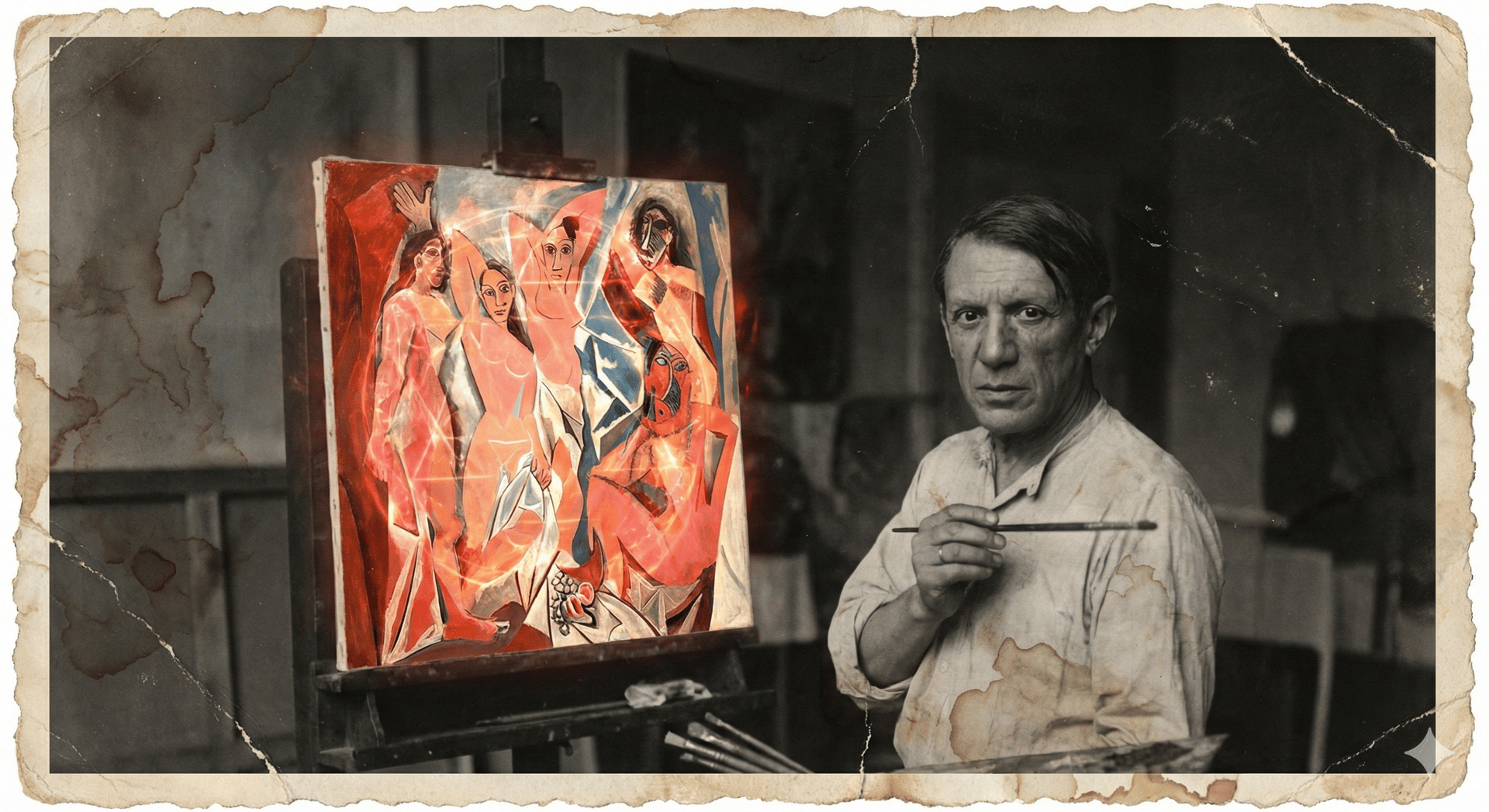
The greatest trick Picasso ever pulled was convincing the world that Cubism was merely a new way of seeing perspective. "We paint things as we think them, not as we see them," he famously claimed. This was a coded admission.
Cubism was not an artistic style. It was macroscopic Chaos Magic. It was an assault on the divine order of creation.
Picasso was a lifelong, practicing Gnostic—a believer in the ancient heresy that the material world is a prison created by a flawed, lesser god (the Demiurge). To the Gnostic, the perfect human form, created in God's image, is a cage.
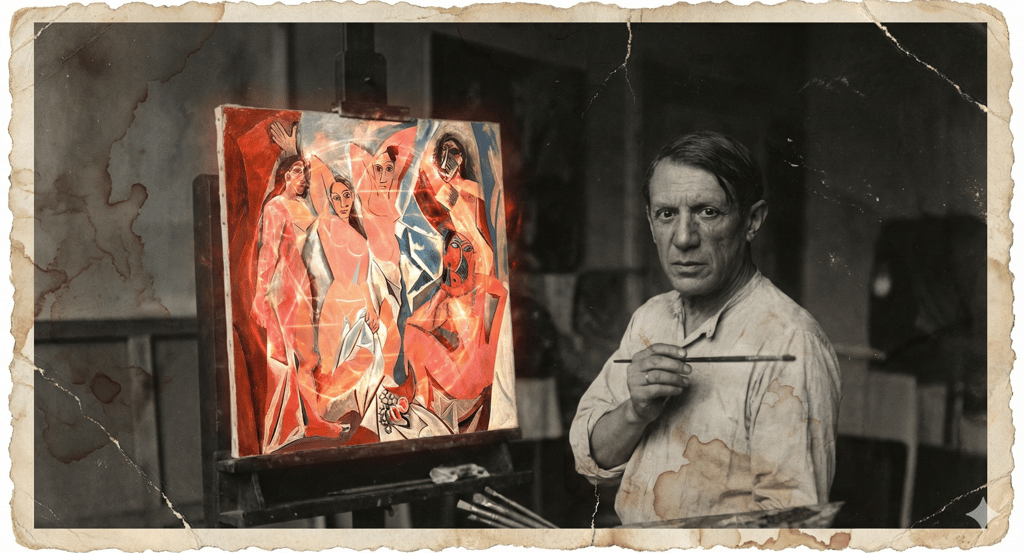
Cubism was Picasso’s alchemical hammer, designed to shatter that cage. By taking the human body and violently fracturing it into geometric planes, dislocating eyes, and rearranging limbs, Picasso was committing an act of metaphysical terrorism. He was symbolically destroying the Creator's work on the canvas, pioneering an aesthetic of disintegration that mirrored the spiritual rot of the modern age.
THE ACCUSATION OF NECROPHILY
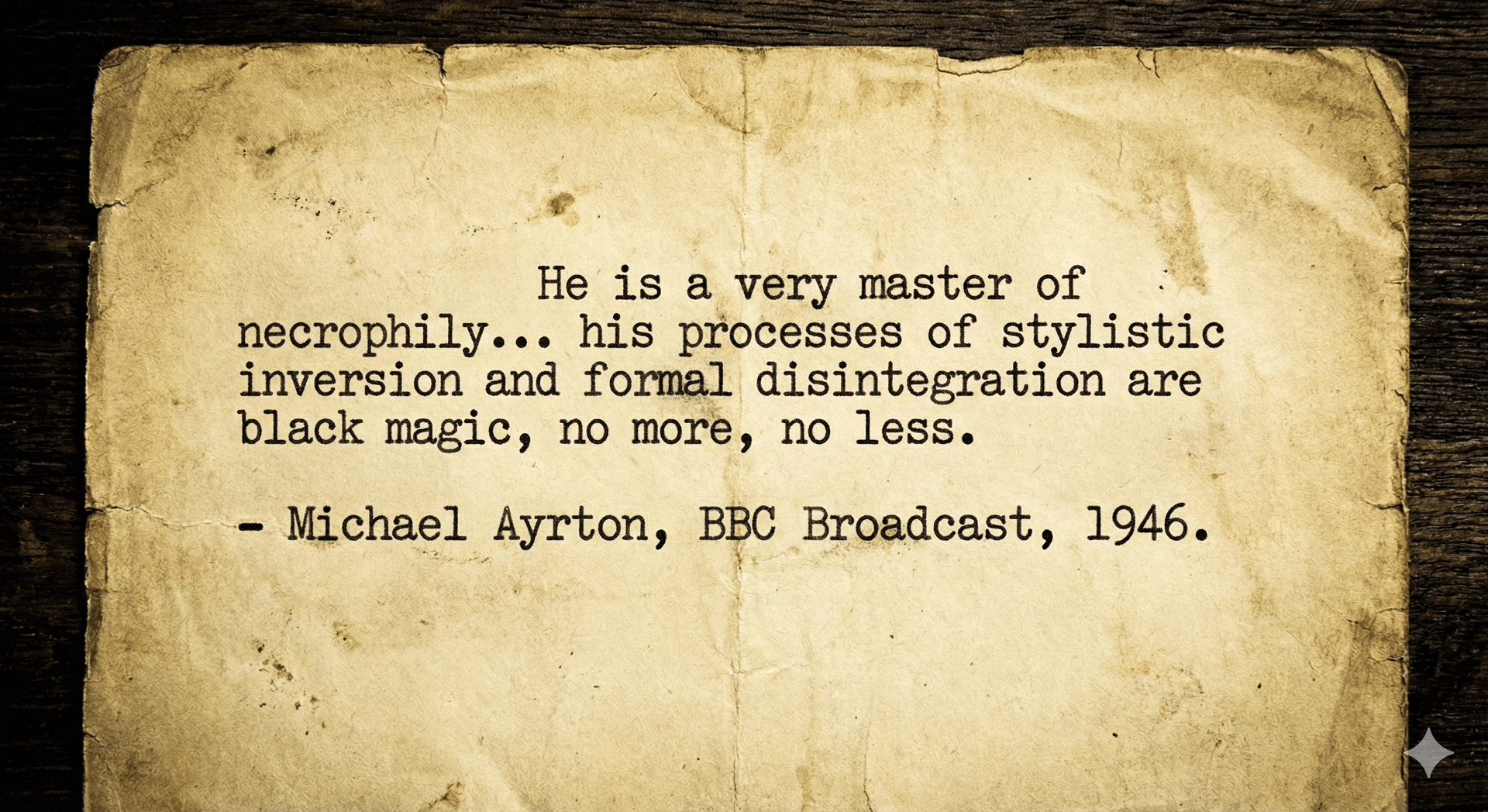
This dark intent was obvious to those gifted with esoteric sight. In 1946, the astute British artist and critic Michael Ayrton Broadcast a scathing indictment of Picasso on the BBC, a broadcast that has been largely suppressed since.
Ayrton recognized that Picasso was not drawing from nature, but actively warring against it. Ayrton famously stated that Picasso’s process was "black magic, no more, no less." He argued that by creating manners and modes for "extinct ends," Picasso was operating a "death cult." Ayrton ultimately branded Picasso a "very master of necrophily"—an artist obsessed with the dead, the broken, and the decayed.
THE ALCHEMICAL TREATISES
Evidence of Picasso’s magical workings is hidden in plain sight within his art, if one knows how to look.
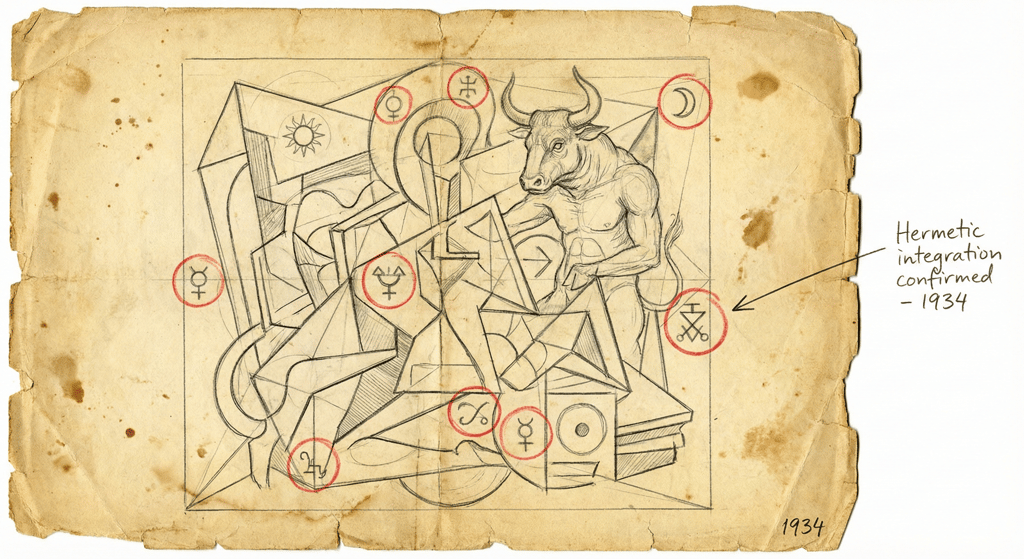
The recently reappraised "1934 Drawing" acts as a Rosetta Stone for his occult symbology. Densely layered with imagery borrowed from the Isis cult, Tarot, and Hermetic alchemy, the drawing demonstrates that Picasso was embedding complex magical formulas into his sketches. His obsession with the Minotaur was not, as critics claim, a simple alter-ego for his virility. In Crowleyan Thelema and older traditions, the man-beast hybrid represents the unleashed, primal chaos essential for the working of great magick.
Every fractured face Picasso painted was a small ritual, a chip in the foundation of reality, preparing the world for a century of unprecedented chaos.