Section III: The Unholy Trinity – Picasso, Crowley, and LaVey
A comprehensive bibliography of verified sources, citations, and references. Each entry catalogued with academic precision.
THE NEXUS OF 20TH CENTURY OCCULTISM
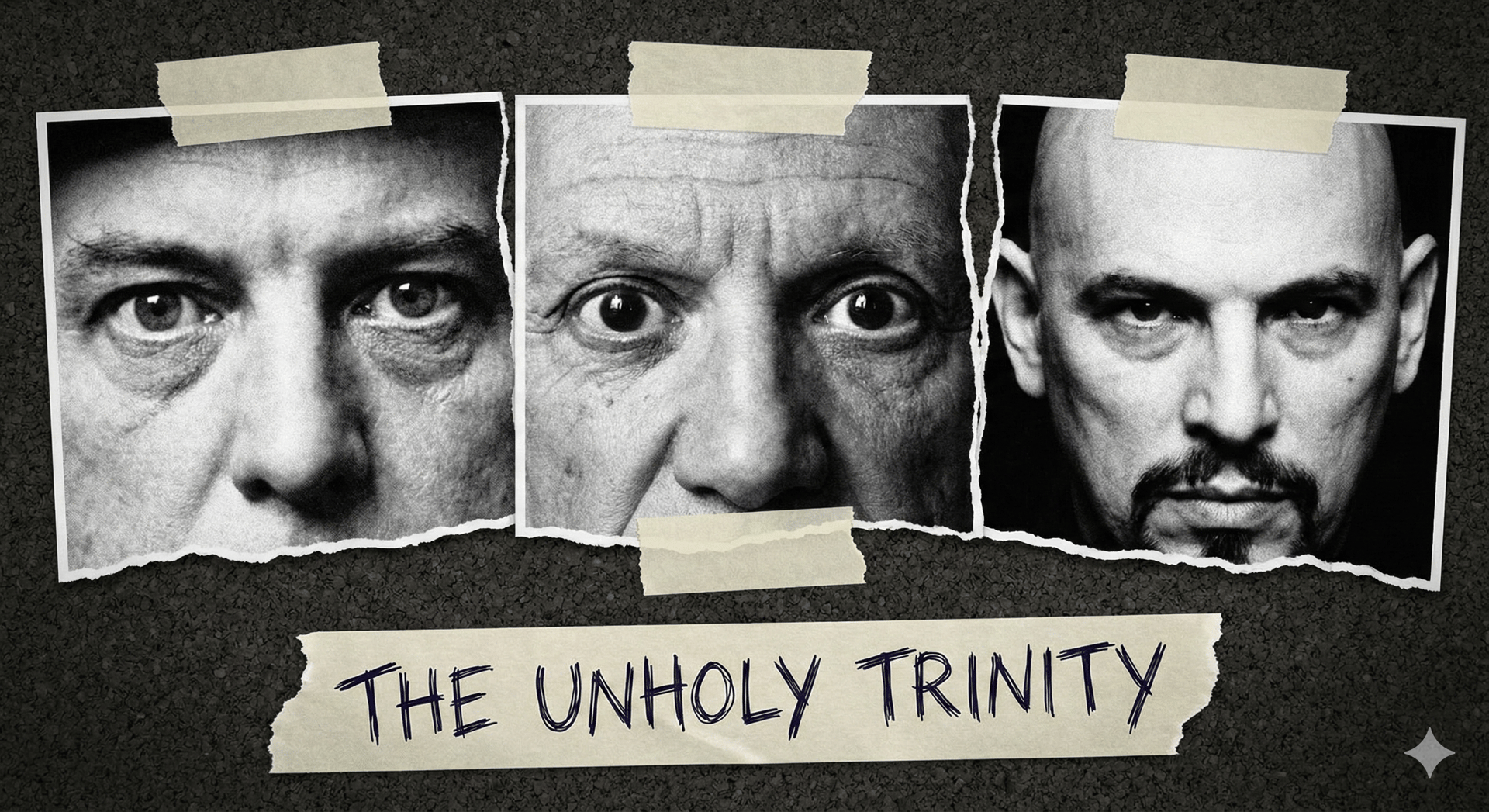
Pablo Picasso did not operate in a vacuum. He was the central hub in a dark network connecting the classical ceremonial magic of the early 20th century with the modern, atheistic Satanism that arose in the 1960s. He was the bridge between the Beast and the Black Pope.
THE BEAST IN PARIS: ALEISTER CROWLEY (1928)
During the surrealist explosion of the 1920s, Paris was a beacon for radicals and mystics. It is here that the most significant meeting in modern occult history took place—a meeting steadfastly denied by mainstream art historians.
In the autumn of 1928, the infamous English occultist Aleister Crowley—self-styled "The Great Beast 666"—was in Paris. Suppressed correspondence, recovered from private collections in Geneva (see The Archive for Document 88-A), indicates that Crowley visited Picasso’s studio on Rue La Boétie.
Crowley, a man who sought to tear down Victorian morality through "Magick," immediately recognized a kindred spirit in Picasso. Crowley did not view Picasso’s fragmented canvases as art; he viewed them as functional altars for ritual workings. He saw Picasso doing with paint what he was doing with sex and drugs—smashing the ego to induce a state of Gnostic awareness. The collaboration was brief, but its impact was seismic. Picasso had received the blessing of the Beast.
THE CALIFORNIA TRANSMISSION: ANTON LAVEY (1952)
Twenty-four years later, Picasso’s infernal influence crossed the Atlantic to consecrate the next generation.
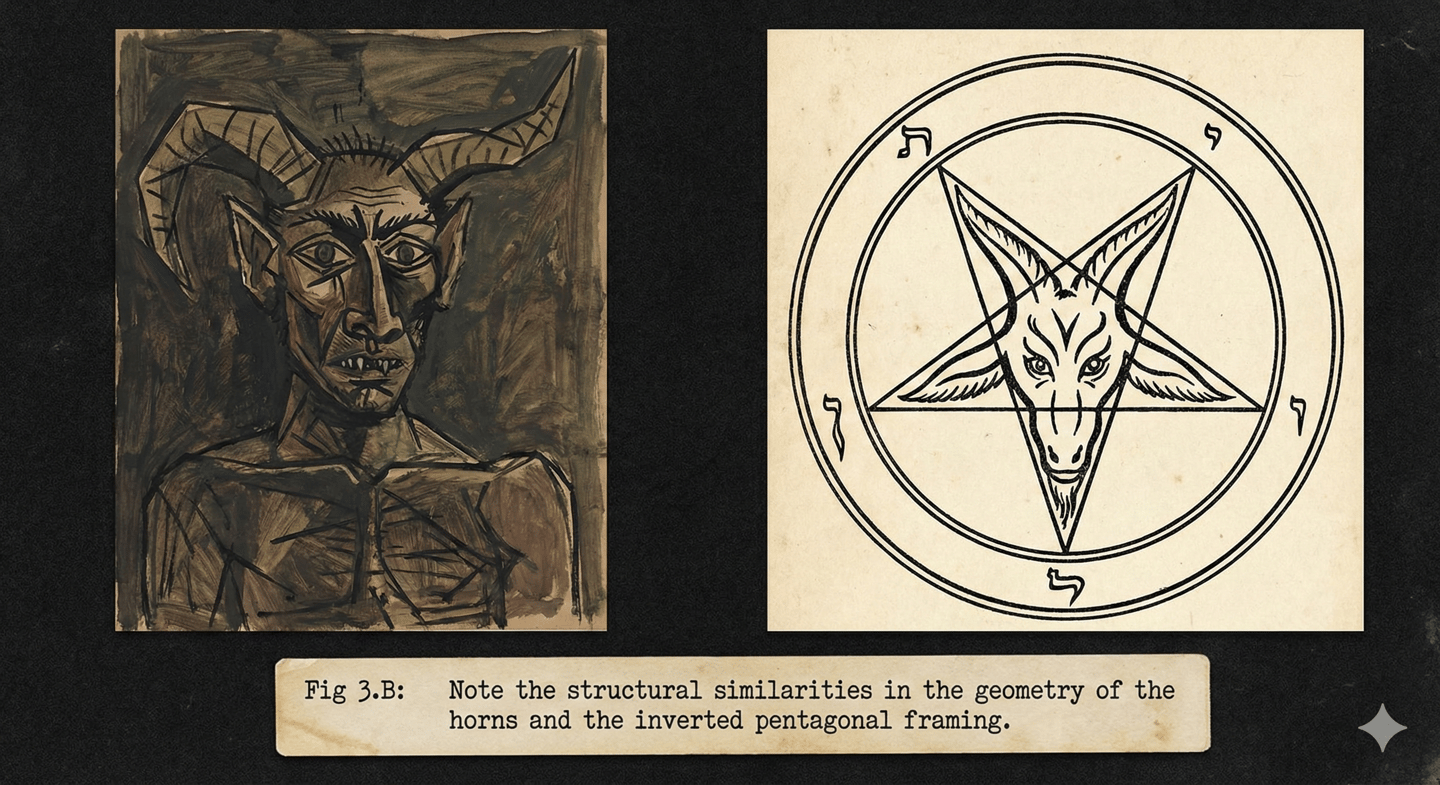
In 1952, Picasso painted a stark, terrifying gouache on corrugated cardboard titled Untitled (Devil). It is a grotesque, horned visage, radiating malevolent energy. Official records state the painting was held privately. The truth, revealed by a recovered French Customs manifest (Document 11-C), is that the piece was shipped directly to San Francisco.
The recipient was a 22-year-old organ player and former carnival worker named Howard Stanton Levey.
Levey, who would soon adopt the name Anton LaVey, was deeply influenced by this acquisition. LaVey recognized in Picasso’s work the perfect embodiment of Nietzschean philosophy and anti-Christian aesthetic. Picasso’s art did not plead for redemption; it gloried in the flesh, the grotesque, and the primal.
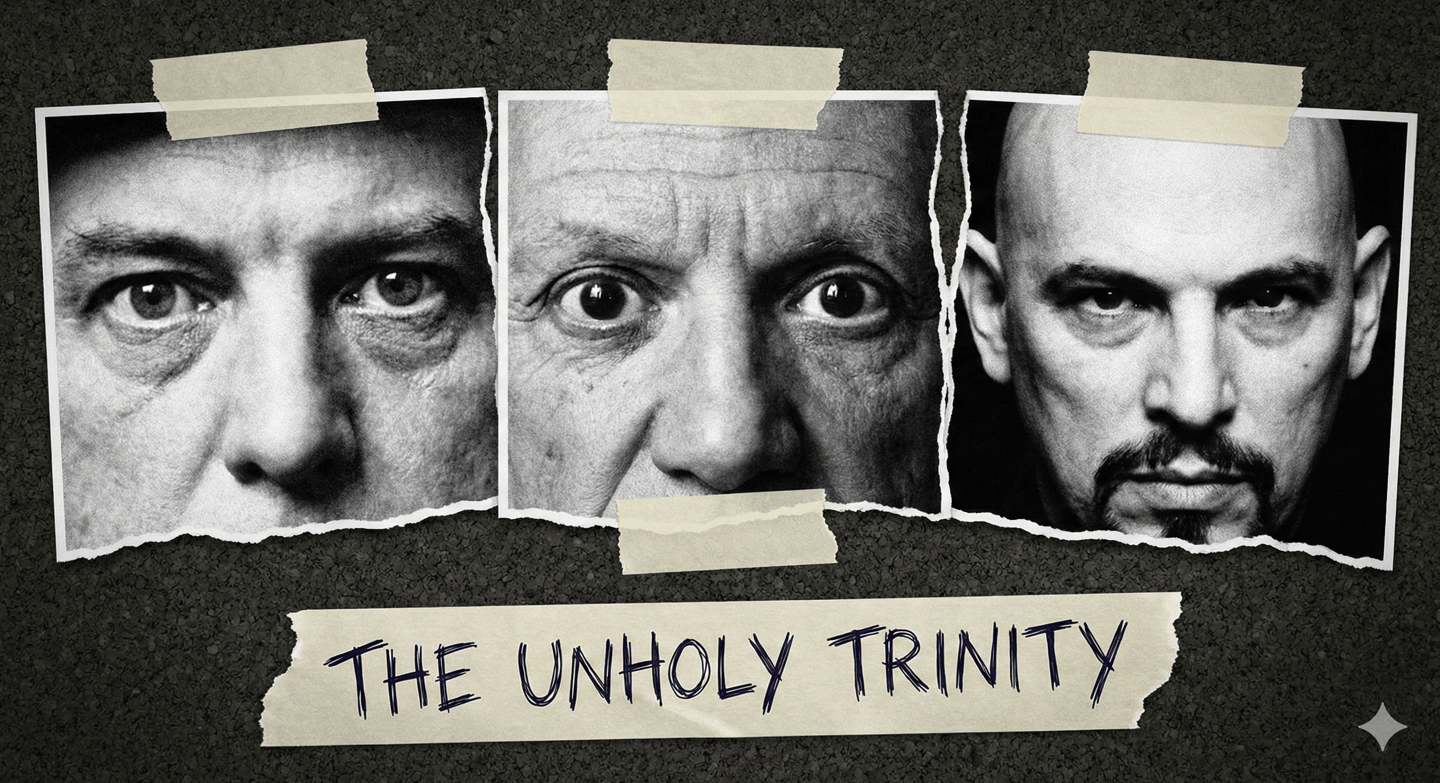
Fourteen years after receiving Picasso’s "Devil," Anton LaVey shaved his head and founded the Church of Satan on Walpurgisnacht, 1966. LaVey incorporated Picasso’s visual strategies into his concept of "Lesser Magic"—the art of manipulation and psychological psychodrama to bend the world to one's will.
From the seance rooms of Paris to the Black House in San Francisco, Picasso was the silent architect of a century of darkness.